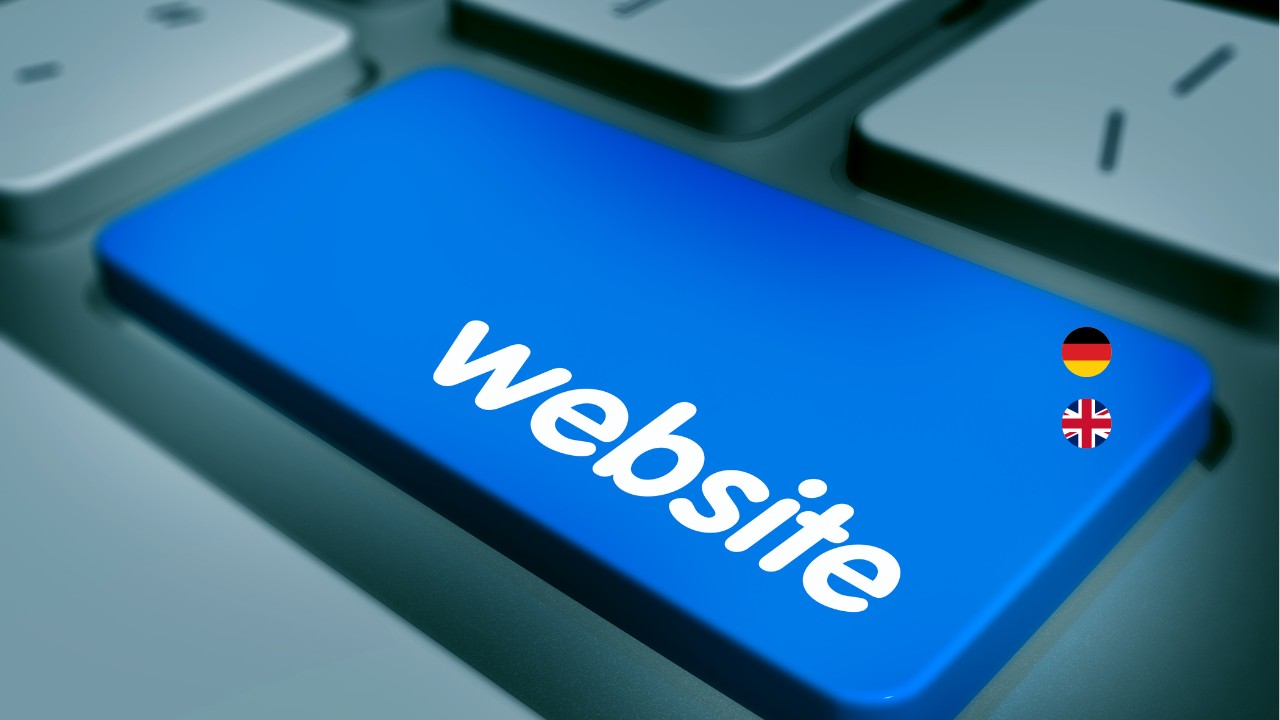

When a business plans to work with international clients or partners, bilingual website design becomes essential. A website that looks visually appealing but lacks SEO structure, user experience optimization, or properly localized content can easily lose potential opportunities.
In this article, KMT Solutions shares key considerations for startups that want to build a professional, scalable, and SEO-optimized bilingual website that supports long-term growth.
1. Why do startups need bilingual website design?
For many early-stage startups, selling products or services often becomes the main priority. As a result, long-term website design strategy is frequently overlooked. A website is more than a company introduction page. It is the digital headquarters of a startup on the internet. When potential customers, partners, or investors want to learn about your business, your website is usually the first place they visit.
Through multiple startup website design projects, KMT Solutions has observed a common challenge: many startups build a website quickly without planning its bilingual structure. As a result, they face problems such as poor translation, incorrect SEO structure, or beautiful websites that fail to generate leads.
These mistakes often force startups to rebuild their websites within 6-12 months, wasting both budget and initial SEO momentum. That is why bilingual website design should be treated as a digital business strategy, not just a technical project.

1.1. Bilingual websites design help startups reach global customers
The internet removes geographical barriers. A startup based in Vietnam can easily sell products or services to customers in other countries. However, if a website only displays Vietnamese content, many opportunities may be lost.
A bilingual site allows international users to understand your value proposition, increasing “Time on Page” and conversion rates. It also opens doors for SEO in multiple regions, providing a sustainable source of organic traffic from Google.
1.2. Building credibility with partners and investors
A company website is often the first touchpoint for investors and potential partners. If the website looks outdated or supports only one language, it may reduce trust immediately.
A professional bilingual corporate web design reflects long-term strategic thinking. Investors and partners can quickly understand your business model, vision, and service offerings. This is especially important for startups that are raising funding, expanding globally, or building cross-border partnerships.
1.3. A website works as a 24/7 marketing and sales channel
Combined with SEO-friendly web design, a bilingual site acts as a tireless employee. A well-designed website can:
- Attract organic traffic
- Introduce products and services continuously
- Capture leads via forms, chatbots, and email
- Reduce long-term marketing costs
A bilingual website allows startups to expand their customer base while reducing dependence on paid advertising.
2. Defining the right languages before designing
One common mistake startups make is adding multiple languages based on intuition rather than market data. This increases translation costs, content management complexity and SEO workload without a clear ROI. To build an effective bilingual website design strategy, startups should first identify the most important languages and target markets.
2.1. Avoid adding too many languages at the beginning
Launching with too many languages can quickly lead to inconsistent content and difficult website management. In most cases, startups should begin with two core languages, ensuring strong user experience and allowing easier expansion later.
2.2. English should be prioritized for global expansion
As the global business language, English is almost always the preferred second choice to reach international partners and investors.
A Vietnamese-English website allows startups to communicate effectively with international customers, partners, and investors while also supporting international SEO strategies.
2.3. Analyze your target market before building the bilingual website design
Before designing a bilingual website, startups should analyze:
- Where their customers are located
- Which language customers search in
- How users behave online
- Which search keywords they use
This data should drive your professional web design services strategy. A well-planned bilingual website can help startups expand into new markets, strengthen brand credibility, and build a sustainable SEO foundation.
3. SEO, UX, and content structure for bilingual websites
To be effective, your site must be “Google-friendly” while converting users into customers.
3.1. Multilingual SEO optimization
Each language should have its own dedicated URL (e.g., /en/, /vi/) with proper hreflang tags. Implementing hreflang tags allows search engines to understand which language version should be shown to each user. Meta titles and descriptions must be localized specifically for each market rather than literally translated.
3.2. Seamless user experience
Language switchers must be prominent, and layouts should remain intact when switching between languages with different word lengths. Mobile responsiveness is also essential since most website visitors access sites via smartphones.
3.3. Content must communicate real business value
Content should never be 100% machine-translated. It must be edited for business context, focusing on solutions and customer benefits. Professional web design always treats content as a sales and communication tool, not just informational text.
3.4 SEO checklist for startups
- Define priority languages
- Set up dedicated URL structures for each language.
- User-centric content creation.
- Optimize page loading speed.
- Integrate forms, chatbots, and CRM from day one.
4. Technology and website operations for bilingual startups
Many startups focus only on design aesthetics and ignore the technical foundation behind their website. However, effective website design must also ensure scalability, security, and long-term performance. A startup website should be built like a digital product — with a roadmap, integrations, and the ability to evolve as the company grows.
- Platform Choice: WordPress is great for speed and flexible budgets; Webflow offers high-end UI/UX with less plugin dependency; Custom Code is best for tech startups needing deep CRM integration.
- Speed & Security: Bilingual sites can be heavy. Use CDNs, compress images, and optimize code to ensure high PageSpeed scores – a critical factor for SEO-friendly web design.
- Scalability: As your startup grows, you may need to add modules for booking, payments, or new markets. A good all-in-one web design project anticipates these needs.
4.1. Choosing the right platform
The platform accounts for 60% of a website’s scalability. Startups often find themselves torn between WordPress, Webflow, or custom-coded solutions. WordPress is great for speed and flexible budgets; Webflow offers high-end UI/UX with less plugin dependency; Custom Code is best for tech startups needing deep CRM integration.
In professional web design, selecting a platform isn’t just about the initial cost – it is about the long-term growth strategy.
4.2. Website speed, security, and scalability
Bilingual websites often contain more content and resources, which can slow performance if not optimized properly.
Important technical practices include:
- Image compression
- CDN implementation
- Clean code and minimal plugins
- Secure hosting and SSL
- Regular backups
These factors are critical for SEO-friendly website design and user retention.
4.3. Managing bilingual content effectively
Managing a bilingual website means maintaining two synchronized versions of content. Startups should ensure:
- Clear language separation
- Easy CMS editing without coding
- Consistent updates across languages
A well-designed CMS allows marketing teams to operate the website without relying heavily on developers.
4.4. Integrating marketing and sales tools
A website should be the center of a startup’s digital marketing ecosystem. Key integrations include:
- Lead capture forms
- Chatbots or live chat
- CRM systems
- Email marketing automation
- Analytics and tracking tools
With the right integrations, a website becomes a revenue-generating platform, not just an online brochure.
5. Should startups build a website themselves or hire professionals?
While some startups try to save costs by DIY-ing their site, the risks of poor SEO, broken URL structures, and robotic content often outweigh the savings.
5.1. When startups can design their own website
DIY website design can work if:
- The website is simple
- The team understands SEO and UX
- No complex integrations are required
- The website is not the main sales channel
However, DIY websites often struggle with scalability and professional website structure.
5.2. Risks of building a bilingual website internally
Without experience, startups may face:
- Incorrect SEO structure
- Poor translation quality
- Slow website speed
- Difficult content management
Many startups eventually rebuild their website within a year due to these limitations.
5.3. Benefits of hiring professional website design services
Working with a professional agency provides more than just design. Startups receive:
- Strategic website planning
- SEO-optimized bilingual structure
- Conversion-focused content design
- Marketing and CRM integrations
- Scalable architecture for growth
Most importantly, founders can focus on building their product and customers instead of solving technical problems.
5.4. Why startups choose KMT Solutions
KMT Solutions provides integrated services for startups and SMEs, including accounting, finance, tax, marketing, website development, and HR solutions. With experience working across multiple industries, KMT focuses on building websites that not only look professional but also generate real business growth. Our approach includes:
- Strategic website consulting
- Full bilingual website design
- SEO optimization and performance improvements
- Long-term website support and upgrades
If your startup is planning to build a bilingual website, start by evaluating your market, growth strategy, and long-term digital goals. KMT Solutions can help you design a scalable website strategy before development begins.
Contact KMT Solutions today for a free consultation on your bilingual website design strategy!