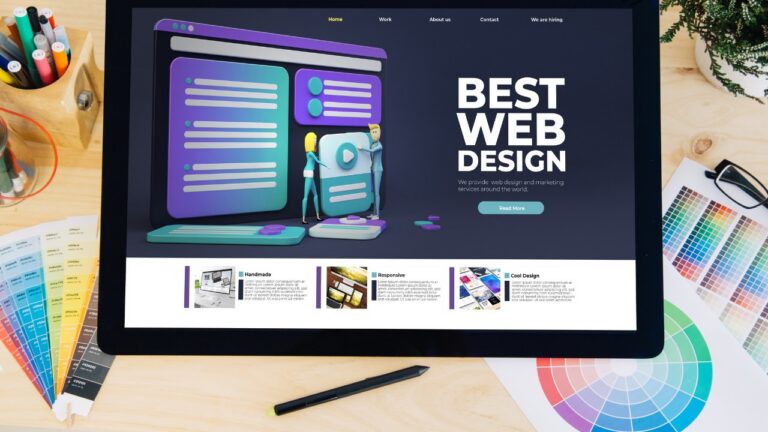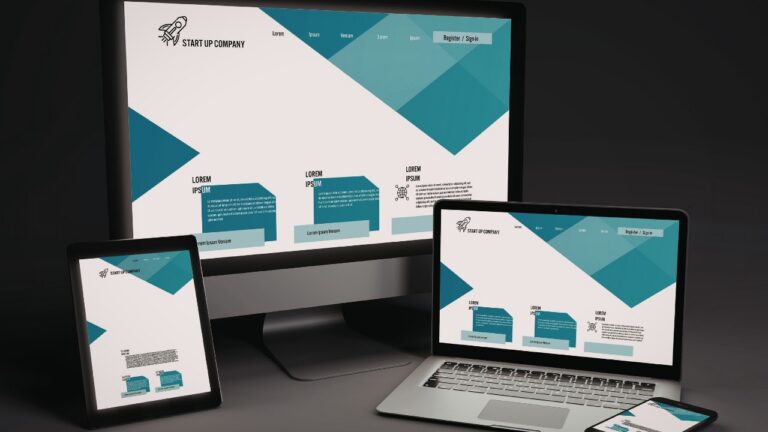

Many businesses invest in a website but fail to generate leads or customers. The issue is rarely the design itself, but the lack of proper SEO structure and strategy. A visually appealing website without clear structure, optimized content, and search engine compatibility will struggle to generate traffic and conversions. An SEO friendly website is not just about technical setup. It is a long-term growth asset for your business.
This guide will help you understand what an SEO friendly website is and how to build one effectively from the beginning.
1. What Is an SEO Friendly Website?
An SEO friendly website is designed and optimized to meet the standards of search engines like Google. Its main purpose is to make it easier for search engines to crawl, understand, and rank your content.
However, SEO is not only about search engines. A truly SEO friendly website must also provide a strong user experience. This includes fast loading speed, easy navigation, and readable content.
A website that is technically optimized but fails to convert users into customers cannot be considered effective. A successful SEO website combines technical SEO, user experience (UX), and content strategy.
2. Why Do Businesses Need an SEO Friendly Website?
An SEO friendly website helps businesses attract customers through organic search. Instead of relying entirely on paid ads, companies can build a sustainable traffic source over time.
It also increases brand credibility. Users tend to trust websites that appear on the top of search results more than advertisements. More importantly, SEO reduces long-term marketing costs. A well-optimized website can continuously generate leads without requiring large advertising budgets.
3. Core Elements of an SEO Friendly Website
An SEO friendly website is not built on a single factor. It requires a combination of structure, content, and technical optimization.
3.1 Clear Website Structure
A well-organized structure helps search engines understand how your pages are connected. This improves crawling efficiency and indexing speed. The structure should follow a logical hierarchy from homepage to service pages and blog content. Important pages should be easily accessible within a few clicks.
3.2 User Experience Optimization (UX)
Search engines increasingly prioritize user experience in rankings. Your website must be easy to navigate and simple to understand. Users should quickly find relevant information and take action without confusion. Layout, typography, and content presentation all play a critical role.

3.3 Mobile-First Optimization
Most users access websites via mobile devices. Google also uses mobile-first indexing to evaluate websites. This means your mobile version directly affects your rankings. A poor mobile experience can significantly reduce your SEO performance. Your website must be responsive, fast, and easy to interact with on smaller screens.
3.4 SEO Content and Keyword Strategy
Content is the foundation of SEO. Without high-quality content, your website cannot rank effectively. SEO content should be well-structured, keyword-optimized, and valuable to users. Keywords must be used naturally across headings and paragraphs. A topic cluster strategy helps cover related keywords and build authority in your niche.
3.5 Technical SEO and Performance
Technical SEO ensures your website runs smoothly and is accessible to search engines. This includes page speed, Core Web Vitals, URL structure, sitemap, and robots.txt. A slow or unstable website will negatively impact both user experience and rankings.
4. What Does an SEO Website Structure Include?
An SEO friendly website structure typically includes three main sections: header, content, and footer. Each plays a role in both usability and SEO performance. Content should be organized using headings to create a clear hierarchy. This helps both users and search engines understand your page.
5. How Does a Bilingual Website Affect SEO?
Bilingual websites allow businesses to reach international audiences. However, improper implementation can lead to duplicate content issues. Proper use of hreflang tags, URL structure, and localized content is essential for SEO performance.
6. How Much Does an SEO Friendly Website Cost?
The cost of building an SEO friendly website depends on complexity, features, and customization level. Although the initial investment may be higher, it provides long-term value by reducing marketing costs and increasing conversions.
7. Common Mistakes That Hurt SEO Performance
Many businesses focus only on design and ignore structure and content. This leads to poor SEO performance.
Common mistakes include:
- No SEO strategy from the beginning
- Poor website structure
- Unoptimized content
- Lack of mobile optimization
8. Technical Architecture: Maximizing Your “Crawl Budget”
In 2026, Google’s bots are more selective than ever. For a large-scale startup website, a messy structure wastes your Crawl Budget—the number of pages Googlebot identifies and indexes on your site within a given timeframe.
8.1. Eliminating “Click Depth” Issues
Research shows that pages buried more than 3 clicks away from the homepage lose up to 80% of their ranking potential.
- The Solution: Use a Flat Hierarchy. Ensure your high-value service pages (like “Tax Consulting” or “Company Formation”) are linked directly from the primary navigation or a high-level category page.
8.2. Managing “Orphan Pages”
An orphan page has no internal links pointing to it. Even if you submit it via a Sitemap, Google perceives it as low-value.
- Pro Tip: Use tools like Screaming Frog or Ahrefs to identify these pages and reintegrate them into your Silo Structure.
9. Advanced Silo Architecture: The “Hub and Spoke” Strategy
Moving beyond basic categories, advanced Silo Architecture groups related content into “Knowledge Hubs.” This signals to Google that you aren’t just a service provider—you are a Topical Authority.
9.1. The Hub (Pillar Page)
Your “Hub” is a broad, high-volume keyword page (e.g., Company Establishment in Vietnam). It provides a comprehensive overview but links out to specifics.
9.2. The Spokes (Support Articles)
These are deep dives into niche questions (e.g., Sub-licenses for F&B, Virtual Office Laws, Capital Requirements).
- The Rule: All “Spokes” must link back to the “Hub” using keyword-rich anchor text. This concentrates “Link Juice” where it matters most.
10. The UX-SEO Synergy: Core Web Vitals in 2026
Google’s Page Experience signals are no longer “bonuses”—they are requirements. Your site structure dictates how these metrics perform.
- LCP (Largest Contentful Paint): A clean structure with optimized code delivery ensures your main content loads in under 1.2 seconds.
- CLS (Cumulative Layout Shift): Avoid “jumpy” structures. Ensure your Header and Ad-blocks have reserved dimensions so the content doesn’t shift as it loads.
- INP (Interaction to Next Paint): Since 2024, INP has replaced FID. A lightweight site structure ensures that when a user clicks your “Bilingual Menu,” the response is instantaneous.
11. International SEO: Structure for Multilingual Startups
For KMT Solutions’ clients targeting global markets, your URL structure is the first thing Google looks at to determine geographic relevance.
| Structure | Example | Best For |
| ccTLD | kmtsolutions.vn | Local authority in Vietnam. |
| Subdirectory | kmtsolutions.vn/en/ | Best for SEO juice consolidation & easy maintenance. |
| Subdomain | en.kmtsolutions.vn | Good for completely different business models/servers. |
12. SEO Website Solutions by KMT Solutions
KMT Solutions provides SEO focused website design for startups and SMEs. We go beyond visual design and focus on structure, content, and conversion. Our websites are built for scalability, performance, and long-term growth. This ensures your website generates real business results, not just traffic.