
Did you know that 68% of websites are currently wasting thousands of potential visitors every day simply due to poor SEO website structure? Many businesses invest heavily in content and advertising, yet their sites remain “invisible” on Google. The root cause? A foundation that wasn’t SEO-ready from day one.
In this article, KMT Solutions shares how to build a rock-solid website structure – the essential foundation for ensuring all your future marketing efforts deliver maximum ROI.
1. Why Should Businesses Care About SEO Website Structure?
1.1. The Reality: A Beautiful Site with No Visitors
Website structure is the “backbone” that determines the success or failure of a digital project. Imagine building a house without a blueprint; it might look great from the outside, but the interior is a disorganized, unusable mess. Many startups over-invest in aesthetics while neglecting architecture. Consequently, users drop off quickly because they can’t find what they need. A disjointed structure is the biggest barrier between your product and your buyer.
1.2. How Good Structure Accelerates Google Indexing?
Search engines like Google use “bots” to crawl data. A logical arrangement allows these bots to crawl and index your most important pages with ease.
- 3-5x Faster Crawling: A clean structure ensures Google Bot moves seamlessly between pages without getting “lost” in low-value areas.
- Establishing Topical Authority: By organizing pages into clear clusters (e.g., Services > Tax Accounting > VAT Filing), Google recognizes your expertise in a specific field.
- Efficient “Link Juice” Distribution: A solid hierarchy allows SEO power (Page Authority) to flow intelligently from your homepage to your deeper service pages.
1.3. UX and Conversion Rates
Beyond SEO, structure directly impacts your bottom line:
- Reduce Bounce Rate by 40-60%: When users find answers instantly, they stay longer.
- Increase Dwell Time: Google views time-on-site as a major quality signal. High-quality content + logical structure = better rankings.
- Guiding the Customer Journey: Smart architecture leads users from “Problem Awareness” → “Solution Research” → “Comparison” → “Purchase Decision.”
2. What is Website Structure? The 3 Core Components
2.1 Definition of a website structure
Website Structure (or Site Architecture) is the hierarchical and logical organization of your web pages and how they link together. Think of it as a “Digital Library”: books are sorted by major categories (Economy, Tech, Education), then sub-topics, and finally specific titles.
2.2 The 3 Essential Components
2.2.1 The Header
The header is the first area users see when accessing a website, often kept fixed (sticky) at the top of the page. This section contains the logo, main navigation menu, search bar, and call-to-action (CTA) buttons such as ‘Contact Now’ or ‘Get a Quote’.
For bilingual or multilingual websites, structure becomes even more critical. Content must not only be organized logically but also clearly separated and connected across languages (e.g., Vietnamese – English), ensuring users and search engines can easily navigate between language versions without confusion.
2.2.2 The Content Area
This is where you deliver real value. It occupies the largest space and has the most direct impact on SEO. Key elements include:
- Breadcrumb Navigation: Shows the user’s location (e.g., Home > Services > Tax). This improves UX and helps Google display rich snippets in search results.
- Page Title (H1): Every page must have one unique H1 tag that reflects the core topic and includes the primary keyword naturally.
- Main Body: Uses a hierarchy of headings (H2, H3, H4), short paragraphs (3-5 sentences), and multimedia (images/videos) with SEO-optimized Alt-text.
- Internal Links: Strategically connecting related services to keep users engaged.
2.2.3 The Footer
Often underrated, the footer builds trust and completes the architecture:
- Business Credentials: Tax ID, address, and licenses (Crucial for Local SEO and E-E-A-T).
- Text-based Sitemap: Links to “hidden” but important pages like Privacy Policies and Terms of Service.
- Social Proof & Trust: Social media icons, ISO certifications, and security badges (SSL, DMCA).
- Copyright: © 2026 KMT Solutions. All rights reserved.
3. 4 Common Website Structure Models
3.1 Hierarchical Structure (Recommended)
The most popular model for corporate and E-commerce sites.
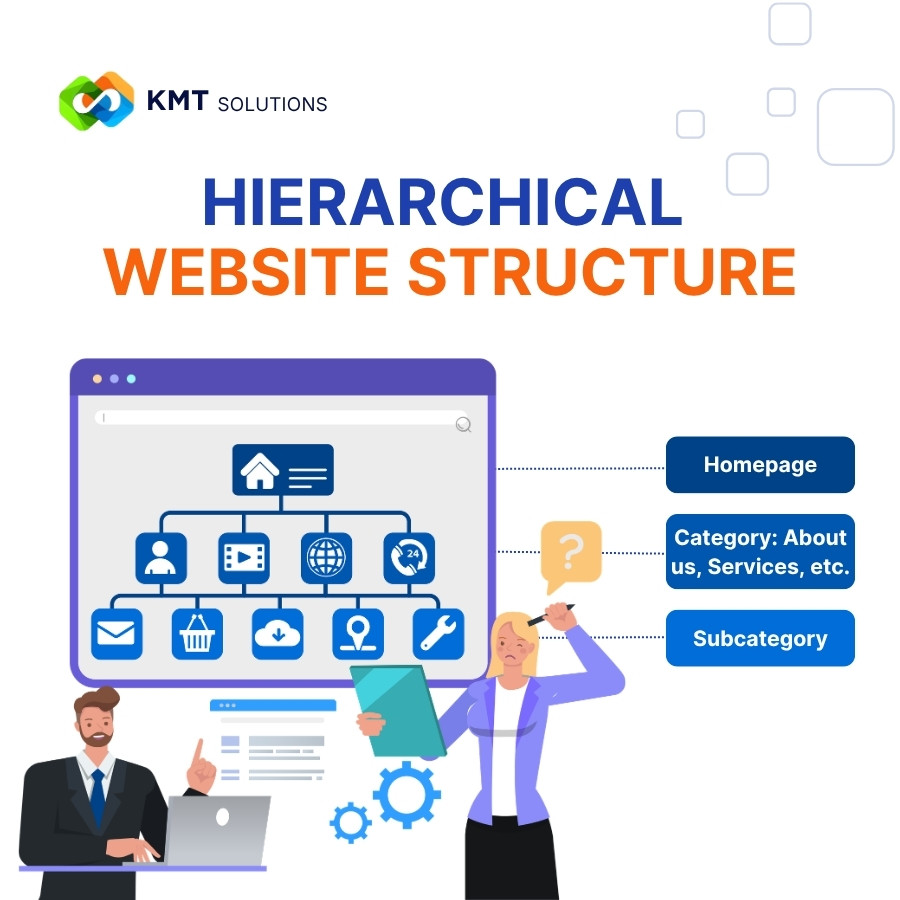
- Pros: Highly scalable; easy for Google to understand; distributes Page Authority effectively.
- Best for: Multi-service firms and large online stores.
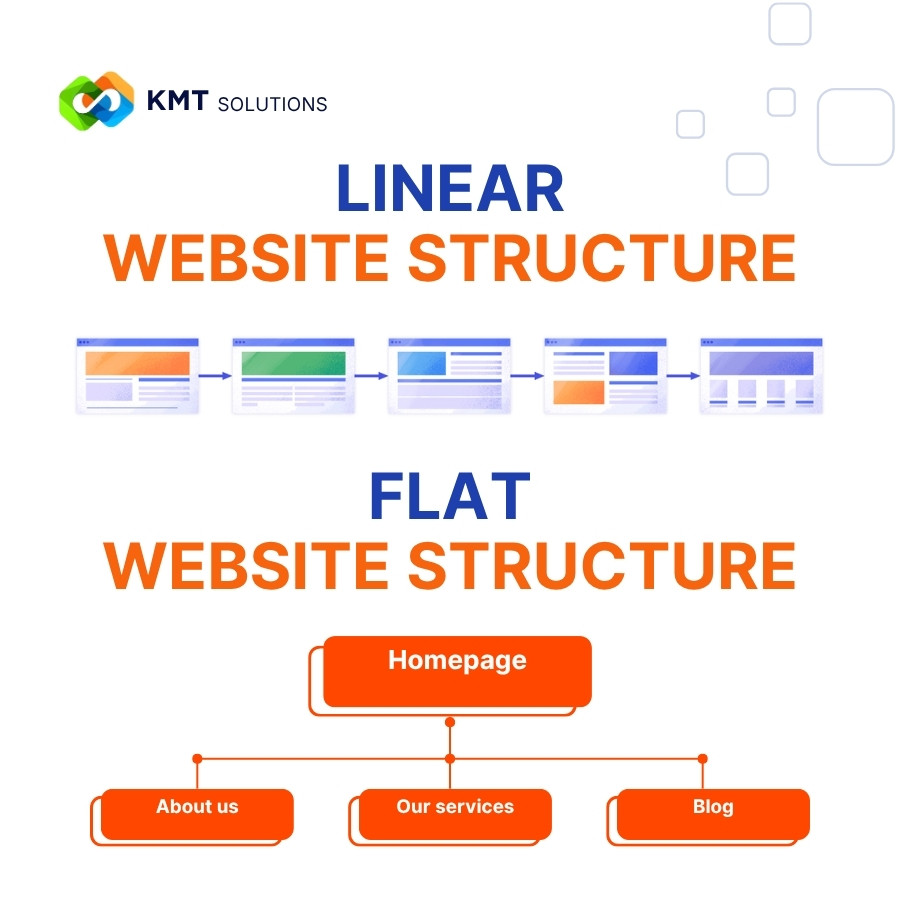
3.2. Linear Structure
Organizes content in a sequential path, leading users through a fixed journey.
- Pros: Optimized for conversions; leads users step-by-step.
- Best for: Landing pages, online courses, and registration processes.
3.3. Flat Structure
Every page is only 1-2 clicks away from the homepage.
- Pros: Lightning-fast crawling; simple navigation.
- Best for: Portfolios, small business sites (< 20 pages), and microsites.
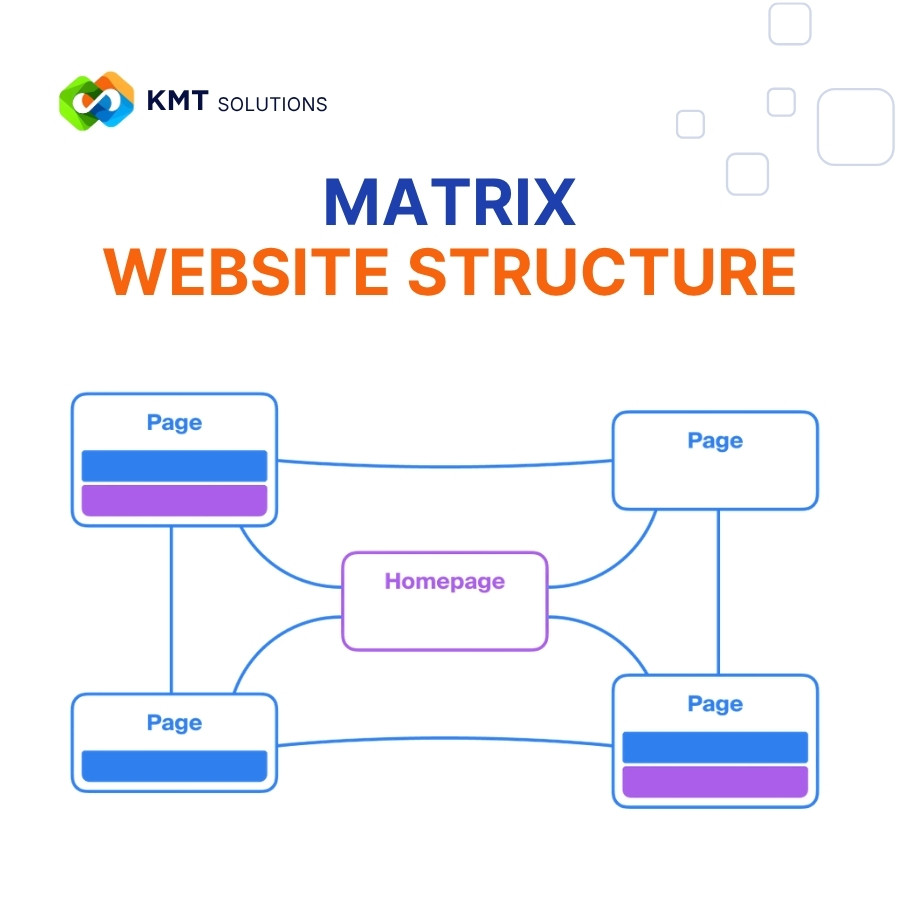
3.4. Matrix Structure
A flexible web of cross-links without a rigid hierarchy.
- Pros: High dwell time; excellent for content discovery.
- Best for: News portals, Wikis, and large-scale blogs.
4. The Golden SEO-friendly Website Checklist for 2026
To ensure your site is “Google-friendly,” ensure you follow these technical SEO standards:
- Implement a Silo Structure: Organize content into deep, specialized groups to establish topical authority with Google.
- Build Sitemaps (XML & HTML): Provide a detailed “roadmap” for both search engines and users to navigate your site effectively.
- The 3-Click Rule: Ensure users can reach any piece of information within a maximum of 3 clicks.
- Logically Hierarchical URLs: Keep paths concise, include relevant keywords, and accurately reflect the page’s position in the site structure.
- Optimize Breadcrumbs: Help users understand their current location and easily navigate back to previous categories.
- Eliminate “Orphan Pages”: Every page on your website must have at least one internal link pointing to it.
- Configure Robots.txt: Guide search bots to focus on high-priority pages while ignoring “junk” or low-value pages.
- Heading System (H1-H6): Use heading tags in a proper hierarchy to create a clear and coherent “skeleton” for your content.
- Optimize Meta Titles & Descriptions: Craft unique and compelling titles and descriptions to boost your Click-Through Rate (CTR) from Google search results.
5. Common SEO website structure pitfalls
- Over-Complexity: Don’t let users get lost in a “content maze.”
- Missing Categories: Disorganized content prevents Google from understanding your niche.
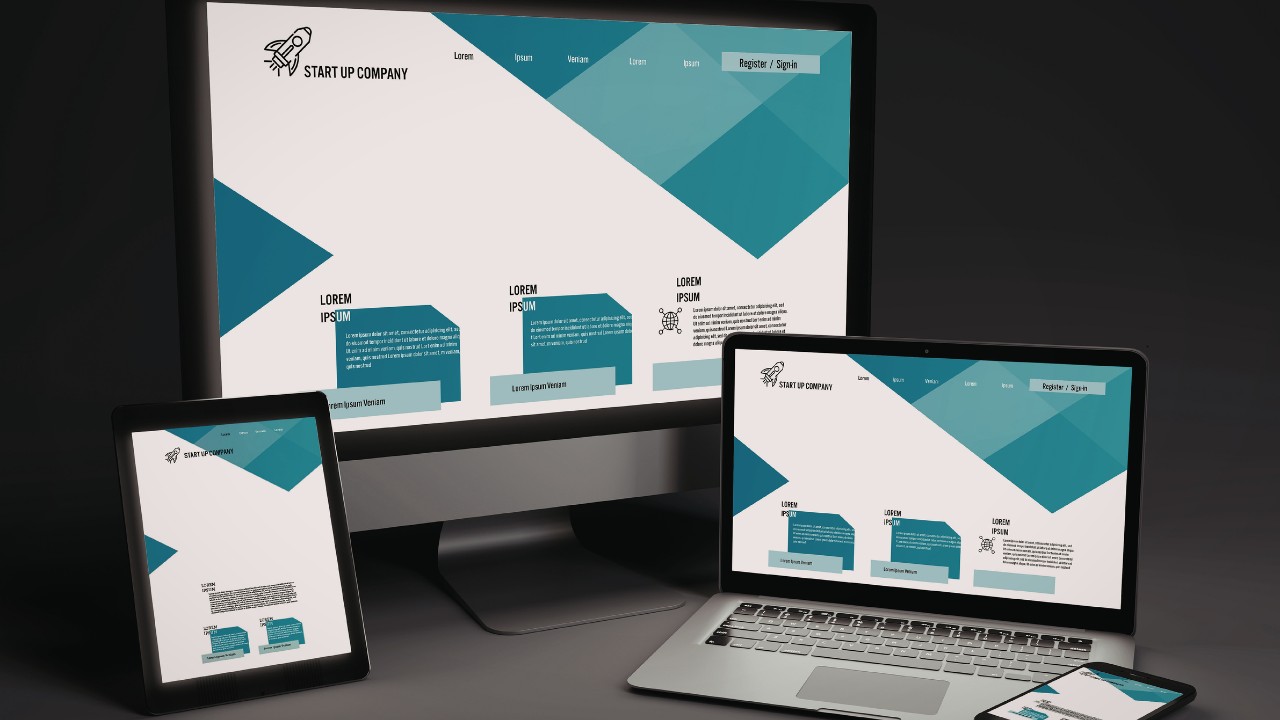
- Neglecting Mobile: In 2026, 80%+ of traffic is mobile. A structure that isn’t mobile-responsive will be penalized by Google.
6. SEO website structure design at KMT Solutions
At KMT Solutions, we don’t just “code” SEO-friendly websites; we build conversion engines based on:
- Deep Research: Analyzing the customer journey to design the optimal Sitemap.
- Technical Excellence: Guaranteeing 90+ PageSpeed scores and SEO-ready frameworks.
- Integrated Thinking: Combining expertise in Marketing, Tax, and Accounting to categorize your content accurately for your specific industry.
Investing in a scientific website structure today saves you thousands in future advertising and maintenance costs. Don’t let a weak foundation stall your business growth.
Is your current website structure optimized? Contact the experts at KMT Solutions for a free website design consultation today!